


Language switcher
Rise to the challenge?
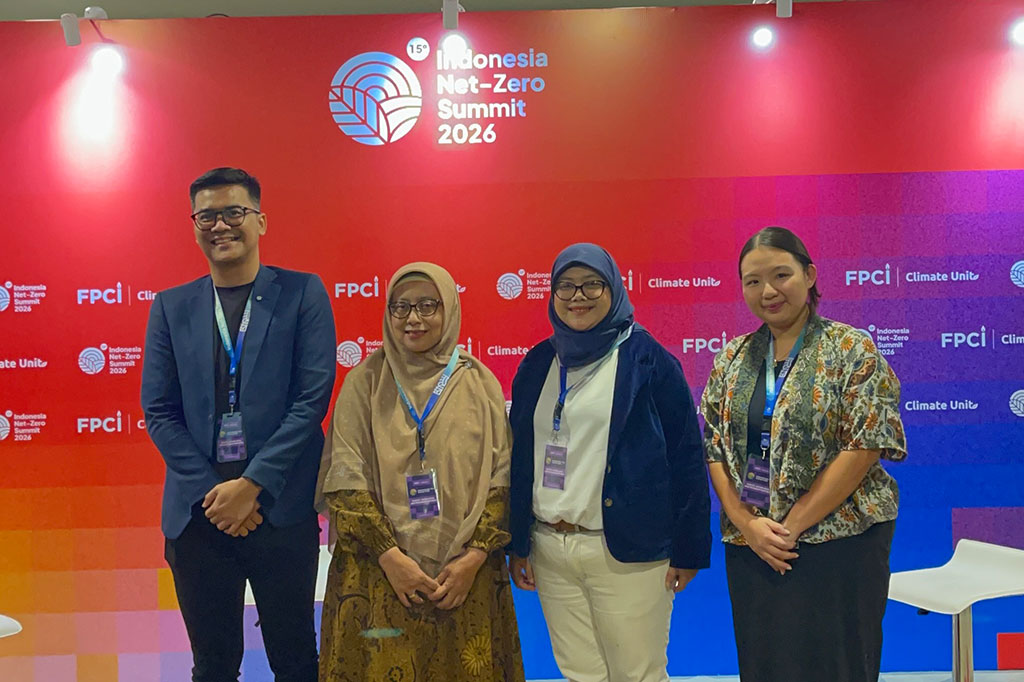
Jakarta, 1 August 2026 – Government officials, industry executives, practitioners and young professionals called for faster development of green talent as the foundation of Indonesia’s shift to a low-carbon economy, speaking at a side event titled Green Jobs and Skills for Indonesia’s Net-Zero Transition held during the Indonesia Net-Zero Summit (INZS) 2026 at Balai Kartini in
Jakarta.
Indonesia stands to create millions of new jobs as that shift gathers pace. BloombergNEF projects that a net-zero pathway for the country could unlock US$3.8 trillion in investment through 2050 and generate roughly 1.3 million direct jobs in renewable energy.
The supply of skilled workers has not kept up. LinkedIn’s Green Skills Report 2025 found that people with green skills are hired at a rate 46.6% above the cross-sector average, a measure of
how far industry demand runs ahead of available talent. A 2026 study by Koaksi Indonesia described the resulting mismatch as a workforce that is ready but difficult to recruit: graduates
hold relevant degrees, yet fall short of what employers need in technical skills, practical experience and certification.
Dr. Nur Hygiawati Rahayu, S.T., M.Sc., director of manpower at the Ministry of National Development Planning (Bappenas), said the government has made green jobs development a
priority in the 2025–2029 National Medium-Term Development Plan (RPJMN).
“We are preparing a roadmap that works on both sides of the market, strengthening supply by aligning competency standards, education and training, and stimulating demand through policies that create green jobs,” she said. “The government cannot do this on its own. Working with business, educational institutions and development partners is what will produce the talent the green transition needs.”
Speaking on the panel, Haryo Ajie Dewanto, founder and Technical and Business Development Director at Dassa Corp, said the company’s sustainability projects rest on three pillars: climate, community and biodiversity. Each project is designed not only to support climate action but to make communities part of the solution through inclusive empowerment, while delivering benefits for biodiversity conservation.
“Green jobs are open to people from every academic background. What we look for is not just technical ability, it is the willingness to keep learning, the readiness to work alongside communities, and the ability to see local problems through a global lens. That is the foundation for sustainability solutions that make a real difference,” Ajie said.
From an industry perspective, Annie Wahyuni, Public Affairs and Sustainability Manager at Danone, spoke about the competencies employers look for, the obstacles to recruitment, and the career paths opening up in the green economy. “At Danone, we see sustainability as work that draws on every discipline, because every skill set has a part to play in answering these
questions,” she said during discussion. “Above all, though, what industry needs is relevant competency, certification and the appetite to keep learning, because sustainability issues move
very quickly.”
Alongside the panel discussion, participants joined an interactive session on green skills covering competency frameworks, career pathways and practical steps into a job market shaped by the
net-zero transition. The forum forms part of Equatorise’s broader effort to strengthen cross-sector collaboration behind Indonesia’s Green Jobs Development Roadmap and to accelerate the talent
development a low-carbon economy will require.
“In the end, every job will become a green job, because every profession will carry a responsibility to weigh sustainability in the decisions it makes and the work it does,” said Christy
Zakarias, Director and Head of Sustainability Transition Advisory at Equatorise. “Green jobs should not be seen as the preserve of specialists. They belong in every function of a company. That is how we begin to account for the environmental and social impacts that have long gone overlooked.”

2025 © Equatorise. All rights reserved. Website by Stand Studio