


Language switcher
Rise to the challenge?
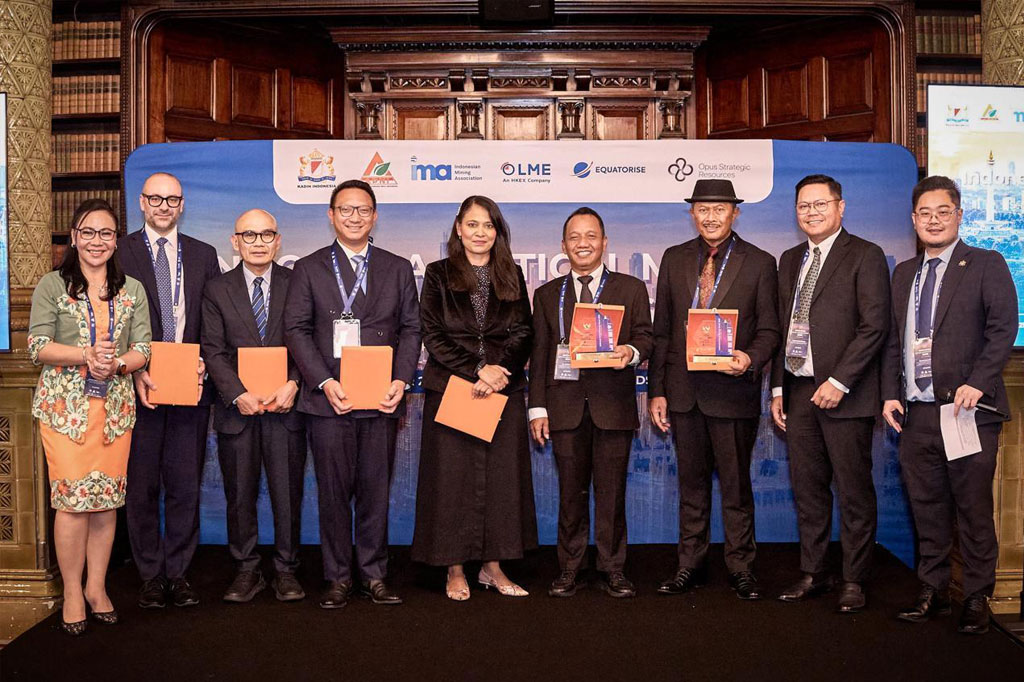
LONDON, 26 October 2026 – Indonesia is stepping up efforts to advance downstreaming and export transparency to strengthen global competitiveness. This priority was discussed as part of the Indonesia Critical Minerals Forum in London on 21 October, held alongside London Metal Exchange Week (LME Week), where global critical mineral industry players, traders and buyers, and policymakers annually gather. Now in its fourth year, the Indonesia Critical Minerals Forum has grown from a small roundtable discussion into a flagship event held alongside LME Week. This year, the forum welcomed approximately 250 participants, reflecting growing international interest in Indonesia’s critical minerals sector and its increasingly important role in global supply chains.
A government of Indonesia representative presented at the forum put exports of downstream nickel products at US$40 billion in 2025, up from US$3.3 billion in 2017. The government’s target for 2026 is at least US$45 billion, showing Indonesia’s ambition to move further up the chain.
“Indonesia’s downstream policy is not about resource nationalism, but resource responsibility. We want to develop domestic industries, create local jobs and provide reliable supplies to international markets. We welcome partnerships that combine long-term investment, technology transfer and high sustainability standards, with value created for both producers and buyers,” said Dr. Tri Winarno, Director General of Mineral and Coal at Indonesia’s Ministry of Energy and Mineral Resources.
Alongside efforts to expand domestic processing capacity, Indonesia is also exploring mechanism to strengthen transparency and accountability in commodity exports. Danantara Sumberdaya Indonesia (DSI), Danantara’s newly established subsidiary responsible for overseeing and managing exports, is developing a system to identify potential discrepancies in commodity export pricing. The initiative initially covers coal, palm oil and ferro-alloys for its pilot phase, with the broader objective of improving export pricing transparency while maintaining existing commercial relationships.
The platform is being piloted using government data, commercial contracts and market intelligence to identify potential pricing anomalies. Its proposed methodology would combine market indices with adjustment factors to account for differences in product quality and contract terms. DSI would conduct pre-export contract verification and subsequently reconcile final invoices against export proceeds, without taking ownership of commodities or replacing existing market participants. The platform is being piloted with nearly 200 contracts collected since its formation in June 2026, representing approximately 50% of export value. Full rollout and integration with existing government systems are targeted by the end of 2026.
“A difference between an export price and a market reference needs to be understood in its commercial context. Our proposed approach combines contract information with market data to identify transactions that need closer examination, while preserving direct negotiations and trade flows between sellers and buyers,” said Luke Mahony, CEO of Danantara Sumberdaya Indonesia (DSI).
Beyond export governance, the forum highlighted the opportunities and challenges associated with developing Indonesia’s broader mineral resources base. Indonesia’s copper sector was identified as an area of significant potential, supported by existing production capabilities and opportunities to develop additional resources. However, long project development timelines, technical complexities and investment requirements remain key considerations in bringing new supply to market.
Indonesia’s experience in developing domestic processing capabilities also offers lessons for other mineral sectors. Aryo Djojohadikusumo, Deputy CEO of Arsari Group and Vice Chairman for Energy and Mineral Resources at KADIN Indonesia, highlighted the role of technology in developing the country’s tin industry.
“Indonesia has several potentially significant copper deposits and established producers with a long track record. The question is how to overcome the technical challenges and long development timelines that hold back new projects. Indonesia has the potential to become a copper superpower, but that will depend on close cooperation between industry and government,” Aryo stated.
The investment case for mineral processing also depends on the outlook for global demand and supply. BloombergNEF’s Transition Metals Outlook 2026 projects that identified copper supply capacity, including recycling, will fall short of demand from 2028 under its Economic Transition Scenario. The projection highlights the challenge of developing new supply quickly enough to meet future demand.
“Copper demand is projected to grow by 60% by 2050, driven by its use in electric vehicles, batteries, data centres and other applications. Yet even with recycling, we expect supply to fall short from 2028, with the gap widening over time. Developing new mines takes many years, so if Indonesia can help close part of this gap, it could be a game changer for the global copper market,” said Martin Tengler, Head of Metals and Mining of BloombergNEF.
As Indonesia continues to strengthen its position in global critical minerals supply chains, discussions at ICMF 2026 highlighted the importance of balancing domestic value creation with the commercial realities of international markets. The forum also underscored the role of international industry engagement in connecting Indonesia’s mineral potential with global capital, technology and market opportunities.
“Indonesia’s ability to capture more value from its mineral exports depends on more than expanding processing capacity. International businesses also need confidence in how export prices are assessed and how legitimate differences between transactions are treated. Clear, commercially grounded verification could help strengthen that confidence while preserving the flexibility businesses need to trade,” said Steven Marcelino, Vice Chair of KADIN Indonesia Bilateral Committee for the UK & Ireland and Managing Partner and CEO of Equatorise.
For Indonesia, the outlook for individual metals will influence where new investment is needed and how quickly resources can be brought into production. Expanding downstream capacity remains central to the country’s strategy, while new supply and credible export arrangements will shape its ability to serve international markets.
The Indonesia Critical Minerals Forum 2026 was hosted by the Indonesia Chamber of Commerce and Industry (KADIN Indonesia), the Indonesia Nickel Miners Association (APNI) and the Indonesian Mining Association (IMA), with the support of the Indonesia Investment Promotion Centre in London (IIPC London), the London Metal Exchange (LME) and Equatorise Advisory and powered by Opus Strategic Resources.
About Indonesia Chamber of Commerce and Industry (KADIN Indonesia)
Kadin is the umbrella organization of the Indonesian business chambers and associations. Kadin is focused on all matters relating to trade, industry and services, and is highly committed to tapping potentials and synergies of the national economy, offering a strategic forum for Indonesian CEOs. It is privately funded, hence an independent spokesperson of private sector interests. It is also the only nation-wide business organization mandated by Law No. 1/1987 to speak on behalf of private business, maintaining a privileged liaison to Government Officials and covering all relevant sectors. 34 regional Chambers (Kadin Daerah) and 514 district branches ensure national coverage. Because of this huge network, Kadin Indonesia is the preferred partner for foreign companies initiating their engagement in Indonesia to become a member of Kadin Indonesia.
About Equatorise Advisory
Equatorise is an international consulting firm supporting Indonesian corporates and institutions to seize opportunities in the UK and the EU, as well as supporting British and European institutions to unlock values in Indonesia, the rising socio-economic powerhouse in the Indo-Pacific region. We help our clients to shape opportunities from the twin transformation of the decade – stemming from digital transformation and sustainable transition into a net-zero post-pandemic future.

2025 © Equatorise. All rights reserved. Website by Stand Studio